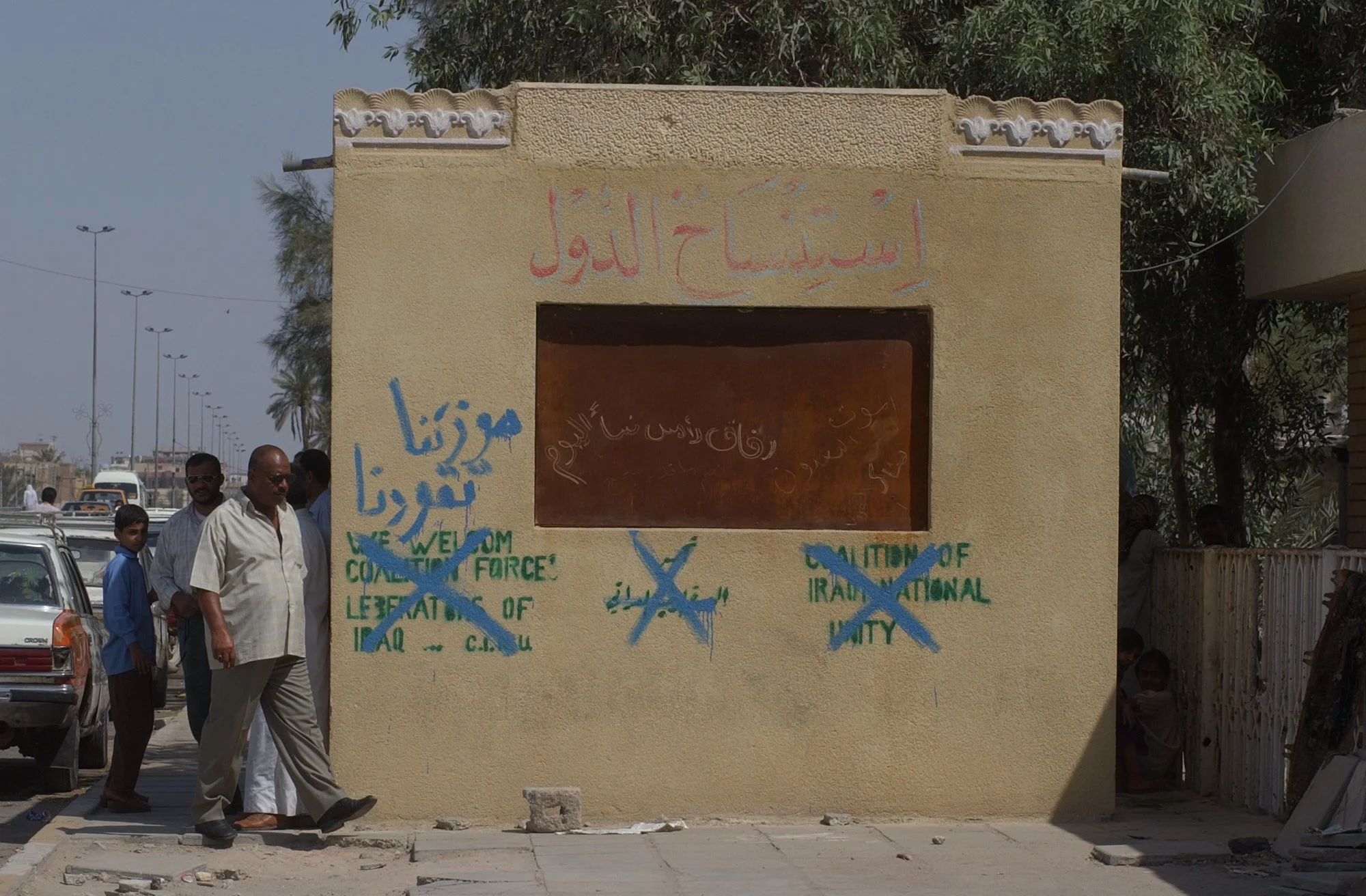
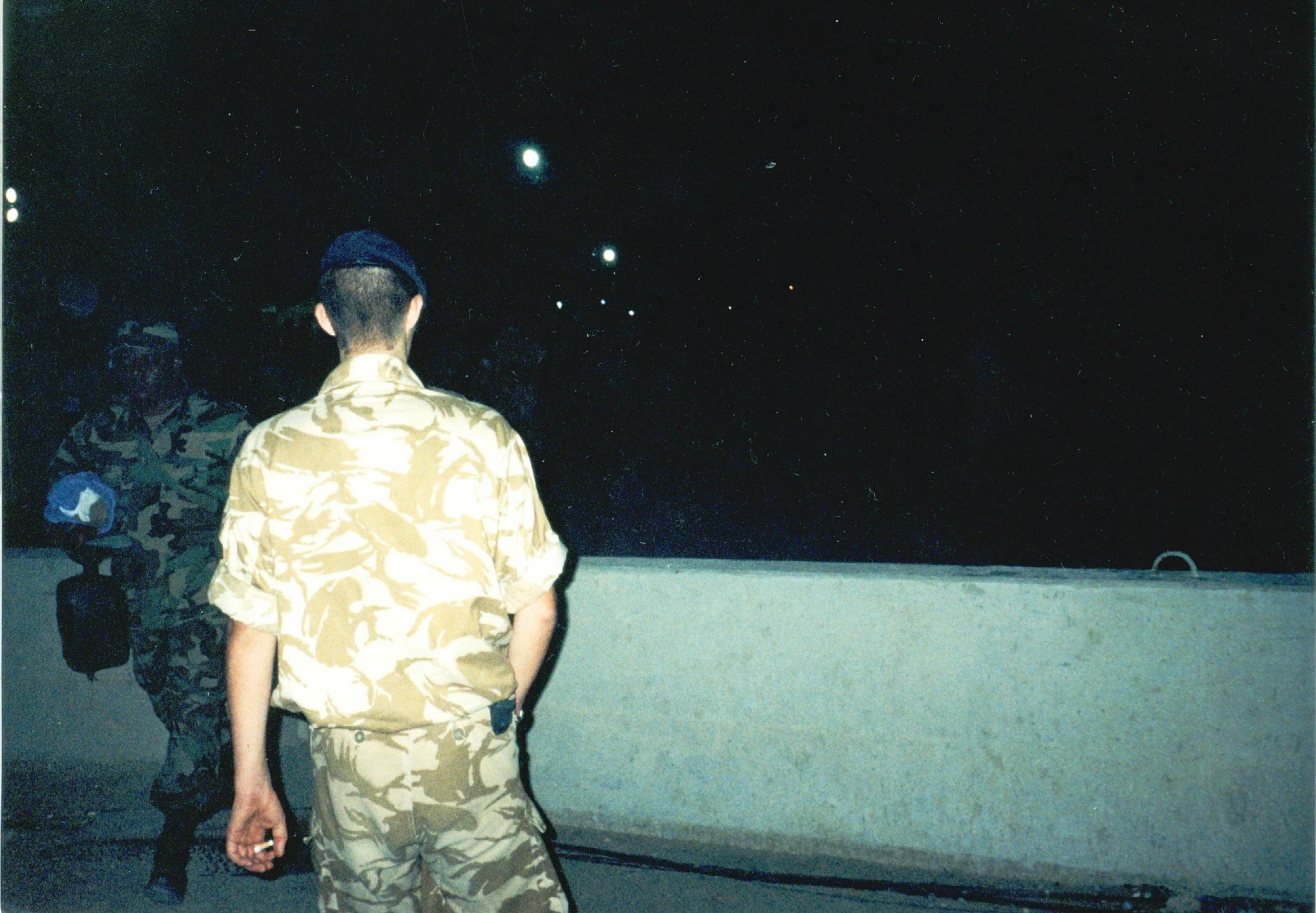
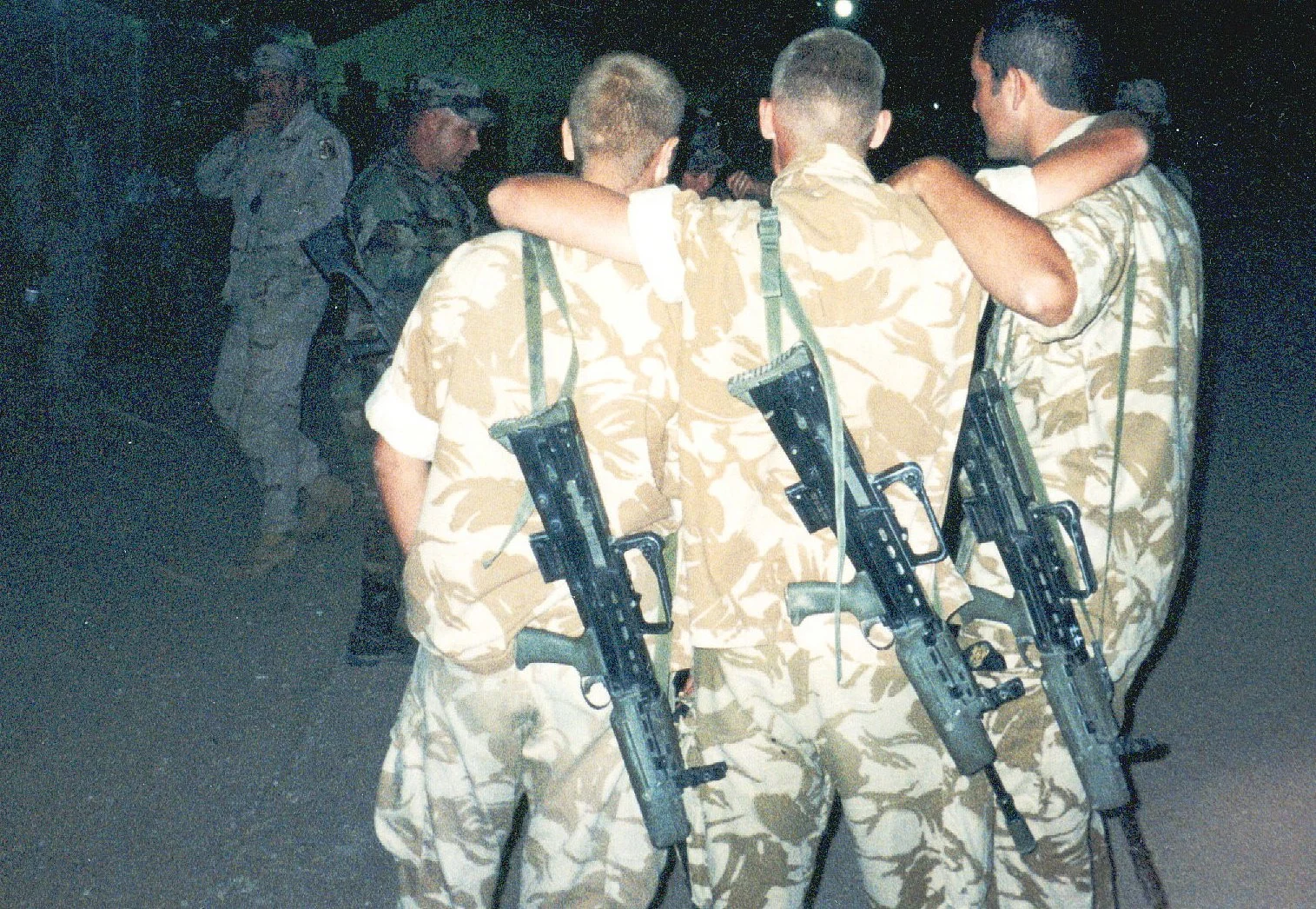
As a British soldier in 2003, Adnan was part of the invasion from Kuwait embedded with the United States Marine Corps, witnessing the immediate aftermath of regime change. During this period, he spent six months in Basra, working in a liaison role as a conduit between Western forces and the local population, providing translations and advice to both sides. He returned in 2006/07 for another six-month tour where under intensive mortar fire he managed the build of a prison for the British Army working with a team of Iraqi builders, surveyors from the UK, an Indian project manager and Danish troops, helping ready Basra Air Station to be handed over to the Iraqi military, the security conditions had deteriorated and British influence waned. These deployments provided a year's firsthand experience of the gap between strategic planning—the expectation of rapid victory and welcomed liberation—and ground-level reality: sectarian violence, inadequate post-conflict preparation, and the emergence of a sustained insurgency that coalition forces were unprepared to counter.
A decade later, he returned to the country for The Economist in 2016 to report on the foreign fighters joining the Kurds to fight against ISIS, documenting the motivations of volunteers from outside the region to become involved in the war. In 2018, he travelled the length of the country from north to south for the BBC's Journey in the Danger Zone, a series he conceived and presented. The documentary was called "the best documentary of the year so far" by TV Times and awarded five stars by the Financial Times. During filming, he witnessed the results of the invasion fifteen years later, with Iraq's population split across sectarian lines.
This dual perspective—as participant in the invasion and analyst of its consequences—shaped his understanding of intervention dynamics, civil-military coordination failures, and the profound difficulty of externally imposed state-building. The experience revealed how military operations achieve tactical objectives while failing to address underlying political, sectarian, and economic fractures, lessons that directly informed his subsequent analysis of Afghanistan's collapse and the recurring patterns of Western intervention failure across the broader Middle East and South Asia.
Selected media
2023, The Felix Fund Gala Dinner, Guest Speaker for the bomb disposal charity to veterans of the Iraq and Afghanistan wars, London
2018, BBC, Journey in the Danger Zone: Iraq, documentary series traveling across Iraq fifteen years after the invasion. Presenter and creator. Called "the best documentary of the year so far" by TV Times, awarded five stars by the Financial Times
2018, 1843 Magazine of The Economist, Saddam Hussein: My part in his downfall. Personal account of the 2003 invasion combined with analysis of intervention failures.
2018, BBC Radio 4, Saturday Live talking about Iraq, Guest with Aasmah Mir & Rev Richard Coles
2018, Telegraph, What next for Iraq?, Personal account of the 2003 invasion and description of journey of Iraq from north to south.
2018, NPR, Saddam Hussein: My Role In His Downfall, Contributor, Full Disclosure with Roben Farzad
2016, The Economist, Why an ordinary man went to fight Islamic State. Reporting from northern Iraq on Western volunteers joining Kurdish forces against ISIS.
2013, The Outpost (Beirut), An Iraqi near the Sandpit, on the 2003 Iraq war. Report on how some British soldiers viewed the local population.